


US Army Explosive Ordnance Disposal officer solves cable breakage issue on x-ray imager
December 25, 2024
A U.S. Army Explosive Ordnance Disposal officer developed an innovative solution to a cable breakage issue on a critical x-ray imager that is used for EOD operations around the world.
1st Lt. Michael T. Elliott, the maintenance officer for the 774th Ordnance Company (EOD), developed an inexpensive modification for the SmartRay Vision x-ray imager.
Elliott was assigned as the maintenance officer when he arrived at the 774th EOD Company.
“From that moment, I began verifying all current issues with EOD gear and spearheaded solutions to maintain, repair or replace items in coordination with the 79th Ordnance Battalion (EOD) S4 section,” said Elliott. “For our Smart Ray Vision X-ray imaging systems, most faults required minor fixes. However, we initially had multiple systems inoperable due to a common issue with the cable, which interfaces with the comm trigger.”
While inspecting the imager cables together with Sgt. Trevor S. Madden, Elliott discovered the same issue.
“Soldiers were inadvertently gripping and turning the wrong spot, causing damage to the solder joints,” said Elliott.
Together with the Regional Support Center on Fort Cavazos, Texas, Elliott navigated the Request for Maintenance Action process with the Smart Ray Vision company’s customer service team, to address the issue.
“Using electrical tape, I applied it where the back two ferrule nuts meet, creating a positive block that prevents improper handling and damage. The feedback on this fix has been overwhelmingly positive,” said Elliott. “This simple step prevents a critical piece of EOD equipment from becoming non-mission capable due to avoidable damage.”
The 774th EOD Company is part of the 79th EOD Battalion, 71st EOD Group and 20th Chemical, Biological, Radiological, Nuclear, Explosives (CBRNE) Command, the U.S. military’s premier multifunctional and deployable CBRNE formation.
From 19 bases in 16 states, Soldiers and Army civilians from the 20th CBRNE Command take on the world’s most dangerous hazards in support of military operations and domestic authorities.
Elliott knows full well the importance of the equipment used by EOD techs since he previously served as an enlisted EOD technician for 12 years.
Elliott served in the 766th EOD Company on Fort Stewart, Georgia, and the 74th EOD Company at Schofield Barracks, Hawaii. He later served at the elite 21st EOD Company on Kirtland Air Force Base, New Mexico. The 21st EOD Company takes on Weapons of Mass Destruction.
“I always intended to join the military to be part of something larger and looked forward to unique opportunities military service provides,” said Elliott. “While attending college, I decided to enlist, specifically with the goal of becoming an EOD technician.”
A native of Trenton, Florida, Elliott earned his bachelor’s degree from the National American University in a partnership program with the Defense Nuclear Weapons School.
“The highlight of my job is leveraging my experience to drive impactful changes in the EOD field and to mentor Soldiers,” said Elliott. “I take pride in being someone others trust to find solutions, whether related to EOD or not. My defining characteristic is tackling problems directly and creating solutions, regardless of how challenging the process may be.”
Read the article HERE

The Top 10 Trends in Digital Radiography
January 3, 2025
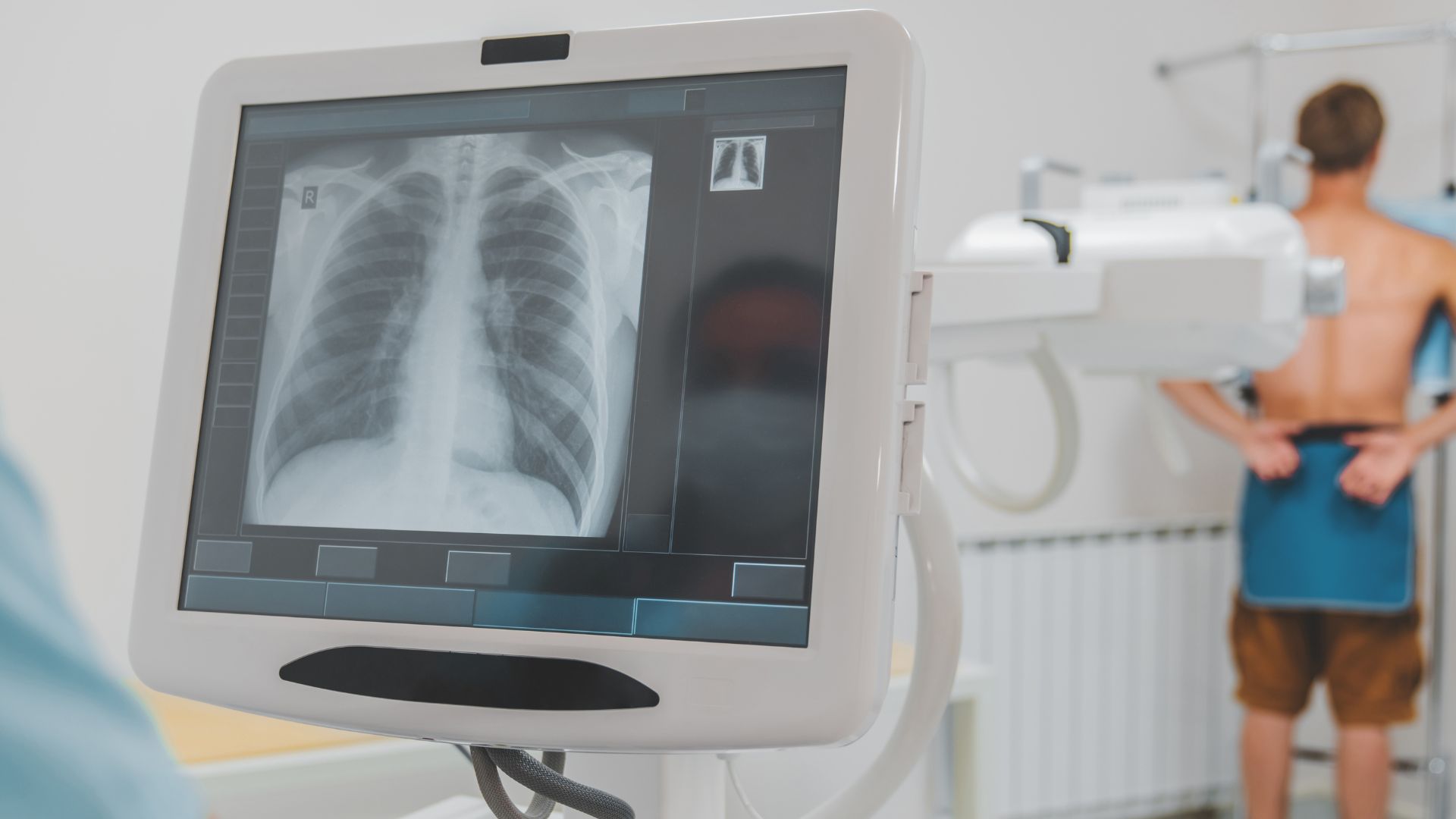
Digital radiography (DR) continues to advance at a rapid pace with today’s technological innovations and evolving healthcare needs. Here is a Top 10 look at just some of the emerging trends in digital radiography.
Advancements in detector technology.
There continues to be an ongoing focus on improving detector technology, including both direct and indirect conversion detectors. This involves enhancements in resolution, sensitivity and dynamic range to provide higher quality images with lower radiation doses. Digital radiography systems continue to evolve with advancements in detector technology, image processing algorithms and software solutions. Manufacturers are focusing on developing compact, high-resolution detectors, improving image quality and enhancing workflow efficiency.
2. Wireless and portable systems.
There is a growing demand for wireless and portable DR systems, particularly in point-of-care settings, mobile imaging units and emergency departments. These systems offer flexibility, convenience, and faster image acquisition times, improving workflow efficiency.
United Imaging offers the ultra-maneuverable uDR380i pro, a mobile X-ray with a high voltage generator and a uVision remote console that improves point-of-care imaging workflow.
KA Imaging recently unveiled its Reveal Mobi Pro dual-energy mobile X-ray system that integrates KA Imaging’s Reveal 35C detector with SpectralDR technology into a complete mobile X-ray solution. Its ability to simultaneously acquire conventional and dual-energy images with a single exposure at the bedside improves hospital and patient outcomes, and protects revenue by reducing outflows. The Reveal 35C detector mimics the workflow, dose and techniques of state-of-the-art mobile DR X-ray.
3. Integration with artificial intelligence (AI).
It is no surprise that AI is being integrated into DR systems to assist radiologists in various tasks such as image reconstruction, noise reduction, artifact correction and automated analysis. AI algorithms can help improve diagnostic accuracy, streamline workflows and enhance efficiency.
Smart Room Assist on Carestream’s DRX-Compass and DRX-Evolution Plus uses AI-based technology and automation to streamline workflow, enabling a more consistent image capture. It also improves patient alignment to help ensure correct positioning.
4. Dose optimization and radiation safety.
There's a continued emphasis on dose optimization and radiation safety in DR. Manufacturers are developing dose reduction techniques, dose monitoring tools and advanced image processing algorithms to minimize patient exposure to radiation while maintaining image quality. Advanced image processing techniques and dose modulation algorithms help minimize radiation exposure to patients without compromising diagnostic accuracy, while addressing concerns regarding radiation safety.
Carestream Health recently launched the new and enhanced DRX-Excel Plus X-ray System that boosts the performance of the powerful, two-in-one solution to enable more productivity and efficiency, higher image quality, and an improved experience for users and patients. In addition to improving workflow, the system has enhanced features to help limit radiation dose — a camera integrated into the collimators allows the radiographer to position the patient directly from the console without using fluoroscopy. In addition, the Automatic Filter Control feature helps ensure that the radiographer selects the proper dose.
5. Cloud-based imaging solutions.
Cloud-based imaging solutions are becoming more popular, and allow for secure storage, sharing and remote access to DR images. Cloud integration facilitates collaboration among healthcare professionals, enables teleradiology services and supports seamless data exchange between healthcare facilities.
6. Enhanced workflow integration.
More and more, DR systems are being integrated into the broader healthcare IT ecosystem, including electronic medical records (EMR) and PACS. Seamless integration improves workflow efficiency, reduces manual data entry errors and enhances communication among healthcare providers.
7. Focus on patient-centric care.
There has been a growing emphasis on patient-centered approaches in DR, including initiatives to enhance patient comfort during imaging procedures, minimize wait times and improve communication of imaging results to patients in a clear and understandable manner.
Fujifilm Healthcare America’s Essentia FS is a complete and compact digital radiography floor mounted system featuring a 10-inch graphic display at the tube for convenient positioning information at the patient’s side. The Essentia SA is an ultra-compact straight arm system, designed for a wide range of standing, sitting and recumbent radiographic exams. Both systems feature Fujifilm’s dose performance technologies to capture superior images at a low dose for the patient providing exceptional price to performance ratio.
8. Remote monitoring and telediagnosis.
With the expansion of telemedicine and remote healthcare services, DR systems are commonly being used for remote monitoring, consultation and even telediagnosis. Remote access to DR images enables radiologists to provide timely interpretations and recommendations, particularly in underserved or remote areas.
9. Market growth.
The global digital radiography market has been experiencing steady growth, fueled by factors such as the transition from analog to digital imaging systems, rising prevalence of chronic diseases necessitating diagnostic imaging, and advancements in healthcare infrastructure in emerging economies. With this also comes the need for more affordable systems.
Carestream Health recently launched its affordable Horizon X-ray System that offers high-quality imaging to help improve clinical outcomes and user-friendly features to help improve productivity. The budget-friendly system is designed especially for small-to-midsize imaging centers, orthopedic facilities, urgent care centers and hospitals.
10. Emerging applications and new markets.
Digital radiography technology is finding new applications beyond traditional medical imaging, including industrial non-destructive testing, security screening and other modalities. As technology continues to advance, new opportunities for innovation and diversification are expected to emerge within the digital radiography industry.
Konica Minolta Healthcare continues to revolutionize X-ray with Dynamic Digital Radiography (DDR), available on four Konica Minolta systems to meet the versatile needs of providers, including the KDR Advanced U-Arm, KDRFlex Overhead, mKDR Xpress Mobile and Chiro Straight Arm systems.
To help expand its portfolio in Latin America markets, Konica Minolta introduced the Momentum KXR Digital Radiography System, an efficient and versatile floor mount solution that offers both table and wall-stand imaging capabilities. Powered by Ultra imaging software and Konica Minolta’s advanced AeroDR flat panel detectors, Momentum KXR provides exceptional image quality and the right combination of advanced features to simplify operation for most general radiography applications. It is designed to assist users with the transition from analog to digital.
These developing trends reflect the ongoing evolution of digital radiography, which is being driven by technological innovation, clinical advancements and the changing landscape of healthcare delivery
Read the article HERE

Dynamic Digital Radiography Quantitatively Diagnoses Diaphragm Dysfunction
February 16, 2025
Konica Minolta Healthcare Americas, has published a case study by clinicians in the pulmonary and radiology departments at ASST Fatebenefratelli Sacco (Milan, Italy) demonstrating the use of Dynamic Digital Radiography (DDR) to help definitively diagnose diaphragm dysfunction. The study, published in the journal Diagnostics, highlights the clinical value of DDR through its unique ability to evaluate diaphragm movement in real time and integrate dynamic functional information with static anatomical data to provide a quantitative assessment of diaphragmatic movement, including excursion and speed.
DDR was used to evaluate a 46-year-old male with a past history of smoking and a 2021 SARS-CoV-2 infection for unexplained dyspnea and reduced exercise tolerance. Spirometry values were below predicted values and a standard chest radiograph depicted an elevated right hemidiaphragm that was not present on a prior CT examination during his SARS-CoV-2 infection.
With the dynamic functional imaging capability of DDR, the authors could visualize thoracic and pulmonary motion and track diaphragm movement. Additional post-processing of the DDR data using Konica Minolta’s Intelligent Workstation (IWS, also known as DI-X1) enabled the measurement of diaphragmatic motion and overall lung mobility, highlighting regional differences in ventilation of both lungs. As a result of the DDR examination, the patient was referred to a thoracic surgeon for possible plication of the right diaphragm.
“Diagnosing diaphragm dysfunction is challenging due to its varied symptoms and causes. While conventional chest Xrays and ultrasound can offer clues, additional imaging and tests are often needed for a precise diagnosis,” says Michaela Cellina, Head of Imaging Research and a radiologist with ASST Fatebenefratelli Sacco. “Dynamic Digital Radiography is an innovative imaging technique that can be captured at the same time as a traditional static chest X-ray, providing valuable real-time insights for a quick and confident diagnosis.”
DDR is the only FDA-cleared radiography solution that enables visualization of anatomy in motion. It acquires up to 15 sequential radiographs per second and processes them as a cine loop, enabling clinicians to observe the physiological cycle as well as individual radiographs. No physician presence is required, radiation dose is lower than an average fluoroscopy exam and the dynamic images can be captured with the patient sitting, standing or on a table.
“Konica Minolta congratulates Dr. Michaela Cellina, Dr. Elisa Calabro and their colleagues on the publication of this case study that demonstrates the ability of one examination – DDR – to deliver a definitive diagnosis of the cause of dyspnea,” says John Sabol, PhD, Clinical Research Manager, Konica Minolta Healthcare. “Adding DDR to a conventional chest X ray, which is routinely acquired in these cases, may eliminate the need for additional tests or imaging studies, helping reduce costs to the patient and health system, and enable a more rapid diagnosis.”
Read the article HERE